Monday, March 10, 2014

Observing & Writing Dialog With Katie Hamstead Teller

Katie Hamstead Teller

While she lives in the U.S. now, this week I’m tickled to introduce you to another author who originally hails from the bush of Australia. Please meet Katie Hamstead Teller.

Born and raised in Australia, Katie’s early years of day dreaming in the “bush”, and having her father tell her wild bedtime stories, inspired her passion for writing.
After graduating High School, she became a foreign exchange student where she met a young man who several years later she married. Now she lives in Arizona with her husband, daughter and their dog.
She has a diploma in travel and tourism which helps inspire her writing. She is currently at school studying English and Creative Writing.
Katie loves to out sing her friends and family, play sports and be a good wife and mother. She now works as a Clerk with a lien company in Arizona to help support her family and her schooling. She loves to write, and takes the few spare moments in her day to work on her novels.

First, please tell us a bit about what you write and why dialog is important in your work.

I write New Adult speculative fiction. The way people talk to each other can show a great deal about their character. How honest they are, or eloquent, or if they lie or speak poorly.

Listening is an integral piece of "people watching". Do you "people listen" automatically, or do you make a deliberate effort?

I do. Since my teen years, I’ve been able to pick up on subtle things, even if I pretend not to notice.

Humans exchange a lot of information paraverbally, that is, through intonation, pacing/rhythm, volume, and enunciation. What paraverbal cues are you most sensitive or tuned into as an author, an observer, and a participant?
Wow! I don’t know. I guess the combinations of all these.

Do you enjoy writing dialog? Is there anything about writing dialog that you find challenging?

I do. Dialog gives characters out of the POV to give their perspective and show their personalities. I think the biggest thing with dialog is keeping it as natural as possible.

What have you learned about yourself and your relationships by observing real life & fictional dialog?

Um… to pay attention to more than just words. Words are limited without body language as someone can say one thing and it could mean several different things without tone, emphasis and so forth.

Do you have any characters with catchphrases or verbal habits? What are they? How do these personal quirks add depth to your characters?

I do try to give characters something they habitually say or do because I find most people do have something like this. Some people say “like” a whole lot, or “um” or “awesome”. I try to do things like pet names, hair ruffles and such to let the personality show through.

Do your characters ever interrupt, cross-talk or change the subject? Do you use communication interference in your dialog? Why/Why not?
All the time! We do it in real life, so why wouldn’t my characters? I have one character who diverts awkward subjects by changing the subject to the weather. The characters around her always know that means she doesn’t want to talk about the subject at hand.

Please share with us a dialog gem that you've recently overheard or participated in. What do you think makes this dialog interesting?

I always hear that reading dialog out loud improves its flow and reduces cheesy and stagnant lines. And like in the earlier question, quirks and “tag lines” make the dialog interesting, and sometimes funny.

Please share with us a dialog gem from your own writing. (If published, please share the title & link to purchase site.) What do you think makes this dialog interesting?

He saw me moving through the bus and stood waiting for me as I stepped out the door. “Hey, beautiful.”
I couldn’t help giggling as he took my hand. Seriously, the giggling thing when I was nervous needed to stop.

This is from my soon-to-be released book, Deceptive Cadence. James always calls her beautiful and this is the first moment he says it. Cadence’s awkward giggling is also something she struggles to control, as you see with her internal dialog. You see both right here at the foundation of their relationship.

Is there anything else about observing and writing dialog that you’d like to add?
Make sure you keep it natural. Think about how people around you speak and communicate and implement that into the writing. Writing is expressing people, characters and events, so what you see should be what the words reflect.


Find Katie at the following links:
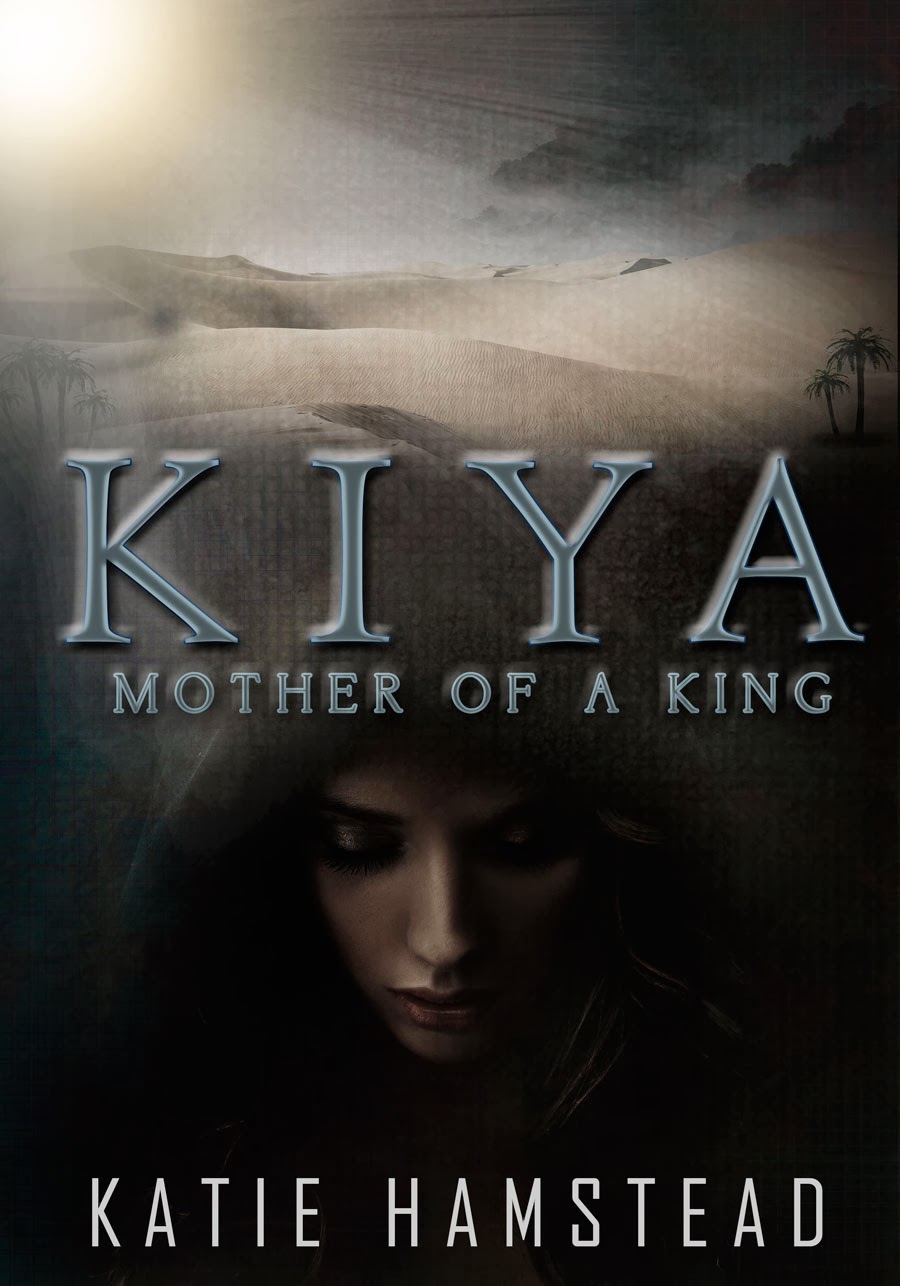
KIYA: Hope of the Pharaoh (Kiya Trilogy #1) - http://www.amazon.com/dp/B00CL19O4E/ref=cm_sw_r_tw_dp_V1v6sb05RNAFM

Sunday, March 2, 2014

Observing & Writing Dialog With Cassandra Page

Cassandra Page

Those of you who know me and/or have been following this series of interviews, know that I grew up in the Alaskan bush, but this week’s author lives in the opposite hemisphere in the land of the original back-country “bush”.  Please help me welcome Cassandra Page.


Cassandra Page is a mother, author, editor and geek. She lives in Canberra, Australia’s bush capital, with her son and two Cairn Terriers. She has a serious coffee addiction and a tattoo of a cat—which is ironic, as she’s allergic to cats. When she’s not reading or writing, she engages in geekery, from Doctor Who to AD&D. Because who said you need to grow up?

First, please tell us a bit about what you write and why dialog is important in your work.

I write young adult and new adult urban fantasy. There isn’t a better way to establish your characters’ voices than through dialogue, in my opinion. (There are other, equally good ways, but better? Nope.) Dialogue is also a brilliant way to tell the reader about backstory without having to resort to the dreaded info dump. The trick is to do it in such a way that you don’t have two characters who both already know something discussing it as though it was new. Because awkward.

Listening is an integral piece of "people watching". Do you "people listen" automatically, or do you make a deliberate effort?

The truth is somewhere in the middle. I’d like to say I do it automatically but I’m self-aware enough to realise I’m an introvert and often lost in my own thoughts, so the truth is that unless I’m already part of a conversation, it takes something to catch my ear before I tune in and focus. Eavesdropping is like research for writers, right? (Hey, at least I don’t go through people’s trash cans!)

Humans exchange a lot of information paraverbally, that is, through intonation, pacing/rhythm, volume, and enunciation. What paraverbal cues are you most sensitive or tuned into as an author, an observer, and a participant?

As a participant, I’m averse to conflict. I hate confrontations. At first that seems like a no-brainer, but I know people who thrive on it, loving a good argument. I’m not one of those, which means I’m most sensitive to cues that let me avoid it if I can: raised voices; hard inflection—the sort of thing that would be indicated in writing by an exclamation mark or a dialogue tag like “she snapped” or “he barked”.
As an author and observer (and the two tend to be the same thing, because when I observe it tends to be with my author brain on), the question is a lot harder to answer, because I don’t think there is any one thing I notice more than the rest. I know my characters tend to mumble and speak softly when they are sad or worried, so maybe that’s it.

Do you enjoy writing dialog? Is there anything about writing dialog that you find challenging?

Writing dialogue is absolutely my favourite thing about drafting—especially the kind of dialogue that is a back-and-forth banter between characters. It flows most easily from my fingers, and I can easily write pages without knowing it. The challenge for me is to break up the dialogue with sufficient action or description of what the characters are doing so that the reader doesn’t get dialogued to death. Usually I have to go back and do that later—otherwise it’s all “he said, she said”, which is blah. But that’s what editing is for!

What have you learned about yourself and your relationships by observing real life & fictional dialog?

As previously mentioned, I’ve learned from real life dialogue that I don’t deal well with being the target of hostility or forced into confrontational situations. I like to imagine myself as a strong, confident person, but I still take things to heart more than I should. As I’ve grown older and (possibly) wiser, I’ve learned to give myself the space to calm down and think about how to respond rather than just leaping in there and saying something I might regret later—or letting myself get harassed into agreeing to something that I wouldn’t have if I wasn’t flustered. (“Flustered” is a great word, isn’t it?)
As far as fictional dialogue goes, the answer again isn’t as clear cut. I have definitely noticed that I love the smart alec characters best—the ones with witty dialogue and wise ass comebacks. I’m currently reading Cassandra Clare’s The Mortal Instruments series, and the testosterone-driven banter between Jace and Simon is a great example of that.

Do you have any characters with catchphrases or verbal habits? What are they? How do these personal quirks add depth to your characters?

My main character in my forthcoming debut, Isla’s Inheritance, tends to argue with herself. So she’ll say something and then think about what she just said—especially when what she’s said is a prevarication. She also loves the word “awkward”.
As do I. Awkward.

Do your characters ever interrupt, cross-talk or change the subject? Do you use communication interference in your dialog? Why/Why not?

I use this technique a fair bit, either as an interjection or an interruption. In real life, people talk over and interrupt each other all the time, often without even realising it. It’s part of the pattern of speech—we so rarely speak in discrete turns. I try and represent that in my fiction, although I tone it down for the sake of readability (in the same way that my character say “um” and “ah” a little bit, but nowhere near as much as real people do).
As for deliberately changing the subject, I tend to reserve that for when a character is uncomfortable with something. Otherwise, I’ll try and steer the conversation in such a way that it happens more naturally.

Please share with us a dialog gem that you've recently overheard or participated in. What do you think makes this dialog interesting?

The conversations that stay with me in real life are the same sort as my favourites to read: those with funny banter. It may be because I’m stereotypically Australian in that I have an irreverent sense of humour. In Australia we call it “taking the piss”—making fun of something or someone, but not in a malicious way. And the funniest banter I’m involved in is usually not safe for work. Ironically, work is where a lot of it takes place (but only when the boss isn’t listening)!
One that stuck with me from last week was between my boyfriend and me. I was telling him about some medical trials I’d heard about, for a possible cure for Alzheimer’s and Huntington’s Diseases. (I know, right?!) His reply made me fall off my chair laughing: “A cure for Alzheimer’s? That’s fantastic news! … What were we talking about again?”
That’s the kind of humour I love. Self-depreciating and irreverent.

Please share with us a dialog gem from your own writing. (If published, please share the title & link to purchase site.) What do you think makes this dialog interesting?

This is from the first chapter of my YA urban fantasy, Isla’s Inheritance, which is told in the first person from Isla’s perspective. I chose it as an example because it shows the difference in personality between Isla and her cousin Sarah, and because it’s fun.
(My publisher, Turquoise Morning Press, would want me to add the disclaimer that these are draft words and the final words may be different or contain more awesome. So please consider those added.)

“Oh my god.” Sarah gave me a hug and pulled me into a little dance. “First kiss, first kiss!” she crowed.
“Shh, Sarah. Not so loud!”
“Why not? It’s great news.”
“But not that I’m seventeen and had never been kissed before,” I hissed. “That’s humiliating!”
“Pfft,” Sarah said, but lowered her voice. “You should invite him in when you get home.” She waggled her eyebrows.
“Sarah! I’ve had enough firsts for one day, thank you very much.”
She laughed.

Is there anything else about observing and writing dialog that you’d like to add?

My pet peeve when I’m reading is the sort of dialogue that is the furthest from real life—where one character will speak for eight or nine lines, presenting several theories and asking a couple of questions, and then the other will reply, again in a huge chunk of dialogue. Maybe it’s just me, but if people really spoke like that, I’d forget half of what I was meant to reply to by the time it was my turn to speak. So my advice? Don’t do that. ;)


Cassandra’s debut novel, Isla’s Inheritance, comes out with Turquoise Morning Press in the (Australian) spring of 2014. If you want to hear more about it, you can cyberstalk her via the following links: Website | Twitter | Facebook | Google+ | Pinterest

Congratulations on your upcoming debut, Cassandra!

Sunday, February 23, 2014

Observing & Writing Dialog With Ryan Parmenter

Ryan Parmenter

This week I’m very pleased to introduce you to Ryan Parmenter.

Ryan Parmenter published his debut novel, Hyperbole as an eBook in 2012. The following year, the author-narrated audiobook and the trade paperback formats were released. A creative jack-of-all-trades, Parmenter created the artwork for the cover of Hyperbole and also recorded an album of 7 songs based upon song titles mentioned throughout the book.
Parmenter graduated from the University of Michigan and later graduated from The Second City Conservatory as an improvisational performer along with the woman who would become his wife.
Parmenter lives in Michigan with his wife and a bunch of pets.


First, please tell us a bit about what you write and why dialog is important in your work.

I write because I like stories, and I like the process of constructing stories. Character is the most important aspect of the fiction I write. The plot evolves based upon what the characters want and the challenges they need to face. The plot ought to service the characters, to reveal more about them, show different aspects of them, and to highlight complexity. I try to write three-dimensional characters. Even when a character is there primarily for comic relief—like Ollie or Todd Crabs in Hyperbole—I still feel like they have to be rounded. They have to have backstories and desires, and they have to have moments where they are not funny and can be taken seriously. Dialog is one of the primary devices for revealing the idiosyncrasies and perspectives of my characters. The words that the characters speak are always their words. Dialog can reveal a dialect. It can hint at a level of education or status. And for a writer of comedy, character dialog in reaction to events or to other characters can be the best opportunity for humor and irony.

Listening is an integral piece of "people watching". Do you "people listen" automatically, or do you make a deliberate effort?

I love people watching, and while I am generally not an intentional eavesdropper, if I’m in a public place and someone is making an ass or him- or herself, I’m all ears. Meltdowns are hilarious. I have to assume that the appeal of watching people have meltdowns is the primary reason for the popularity of “reality” TV. But histrionics aside, I do pay attention to speech patterns and cadences and diction. Friends, family, coworkers, service providers, news anchors: There are so many opportunities to capture gems. And I don’t necessarily mean writing down verbatim quotes, but I am constantly noting manners of expression. The ways in which people misuse words. Or the way that some people make statements that always seem to end as questions? And in modern America, I’d bet that if you wrote out the real-world dialog you hear on a daily basis, a vast majority of it would be fragments. We’re too lazy to speak in complete sentences. And we tend to assume that listeners will be able to fill in the words or concepts that we omit.

Humans exchange a lot of information paraverbally, that is, through intonation, pacing/rhythm, volume, and enunciation. What paraverbal cues are you most sensitive or tuned into as an author, an observer, and a participant?

Tone is a big one. Variances in tone can be conveyed by descriptions of pitch and body language. In terms of dialog, tone is can be conveyed by diction, sentence length, whether characters complete their thoughts or interrupt themselves. Slang is a good way to make it immediately casual. Or introduce fancy words to show your characters trying to be formal or pretentious. If a character slurs, mumbles, or mispronounces, that can enhance the characterization or subtext. Of course, volume can convey a lot about characters. Quiet, thoughtful dialog is sweet, while quiet, harsh dialog can be sinister. While I enjoy writing descriptions, in many cases, the more I can convey simply through dialog, the better.

Do you enjoy writing dialog? Is there anything about writing dialog that you find challenging?

I love dialog because I love getting into my characters’ heads. Dialog is the way you show characters expressing themselves, and much like in the real world, some are much more eloquent than others. My goal when writing dialog is for the reader to be able to determine who is speaking without explicitly noting, “said Harland” or “said Rena.” Ideally, the voices will be unique enough in word choice or speech pattern, even without considering the ideas being expressed. Sometimes the biggest challenge can be deciding in a particular scene or moment whether a character should say anything, or whether to let their actions speak for them.

What have you learned about yourself and your relationships by observing real life & fictional dialog?

I’ve learned to deconstruct being a dick! Seriously, though, I have spent a great deal of time figuring out how to write characters I wouldn’t necessarily want to spend time with if they were real. For instance, I might ask myself, “What does it sound like when someone is condescending?” They’re curt, they use harsh words, and sometimes they spell out the obvious because they assume everyone else is stupid. I’ve learned from my characters to avoid saying certain things. For instance, I will probably never again utter the phrase, “Yeah, right” without it being a joke. Some people, and some characters, have learned the art of word economy, and they can express themselves efficiently. Others will go on and on and on and won’t seem sure about when they should stop talking, and they’re never quite sure if their point has been made clearly enough, and five more minutes of nonsense …

Do you have any characters with catchphrases or verbal habits? What are they? How do these personal quirks add depth to your characters?

Harland, the narrator of “Hyperbole,” has such an intense inner monologue that he doesn’t feel the need to say much out loud. Despite the occasional soliloquy, he tends to be concise in dialog and to fall back on asides and one-liners wherever possible. But it’s really a defense mechanism, an extension of insecurity. Meanwhile, a character like Todd Crabs is a bit more of a caricature, speaking his own shorthand, assigning nicknames (“Brub,” “Chooch,” “Plumps”), but it’s still an extension of him and how he prefers to express himself. Rena is not one to take any b.s., and her dialog reflects it. She gets to the point. Nestor is somewhat similar. He has a sense of humor, but he portrays a pragmatism and level-headedness that the others don’t. And Ollie--bless his soul--is a space cadet, and his dialog is always full of comic/tragic naiveté. Poor Ollie gets to speak most of the malapropisms, like Paulie Walnuts from “The Sopranos.”

Do your characters ever interrupt, cross-talk or change the subject? Do you use communication interference in your dialog? Why/Why not?

As the characters are frequently inebriated and selfish, there is a lot of cross-talk, meandering, and poor communication. The core group of friends generally means well toward one another, but none of them have well-developed filters or senses of politeness. There’s one point where Harland is with the others and he is preoccupied thinking about plot twists in video games, and by the time he mentions his favorite example to the group, they’ve moved on to discussing something entirely different. It’s one of many instances where you realize Harland may not be the most reliable narrator. Poor communication is one of the primary plot devices.

Please share with us a dialog gem that you've recently overheard or participated in. What do you think makes this dialog interesting?

I overheard someone in the office where I work say, “We have to spend more time being efficient.” I’m a big fan of contradictions and irony. I have a weird sense of humor.

That one is so good, it sounds like it belongs on a t-shirt!

Please share with us a dialog gem from your own writing. (If published, please share the title & link to purchase site.) What do you think makes this dialog interesting?

Here’s a brief exchange between Harland and his romantic partner, Rena:

Rena looks at me, waiting. I let her wait. Finally, she says, “Harland.”
“Yeah, I heard you.”
“Do you agree?” She’s becoming my mother again, stern without anything to back it up.
“Yeah, sure, whatever.”
“Harland,” she says, “I don’t want you dying for no reason.”
“Dying for a cause is overrated,” I say. “I’d rather die for nothing.”

This is an excerpt from the novel Hyperbole by Ryan Parmenter, available from Amazon as an eBook, paperback, and an unabridged audiobook narrated by the author:http://www.amazon.com/gp/product/B00H1C8SE0/

I like this simple exchange because it summarizes the tension in their relationship. Harland is being intentionally childish and obstinate. He’s also portraying nihilistic tendencies, whether or not he actually means what he’s saying. You see Rena, is impatient but wanting real input from her partner. I think it’s a cool moment, and it ends with one of Harland’s signature non-sequiturs.

Is there anything else about observing and writing dialog that you’d like to add?

I like to keep an open ear and take notes. I don’t like to use real-world dialogue in fiction, but I have no problem with basing dialogue patterns or character traits on real-world observation. Also, I try to keep exposition through dialog to a minimum. If it’s a big reveal and you can do it through a line or two, I think that works. But I don’t like reading paragraphs of characters divulging plot details to one another, so I try to avoid that in my own fiction. And most importantly, I try to let the dialog be one of the many methods by which flawed characters can reveal even more of their shortcomings and the stuff that makes them (fake) human.
Thanks so much for the interview, Marcy!

It’s been my pleasure, Ryan. Thank you for sharing your thoughts and some great examples of pithy dialog.

Readers, you can find Ryan Parmenter and his work in the following locations:
“Hyperbole” eBook:


“Hyperbole” Paperback:

“Hyperbole” Audiobook:

Amazon Author Page:

“Hyperbole” Book Trailer:

“Hyperbole” on Facebook:

“Hyperbole” on Google+:

“Hyperbole” on Goodreads:

Ryan Parmenter on Twitter:
@RyanCParmenter